The Self as Product
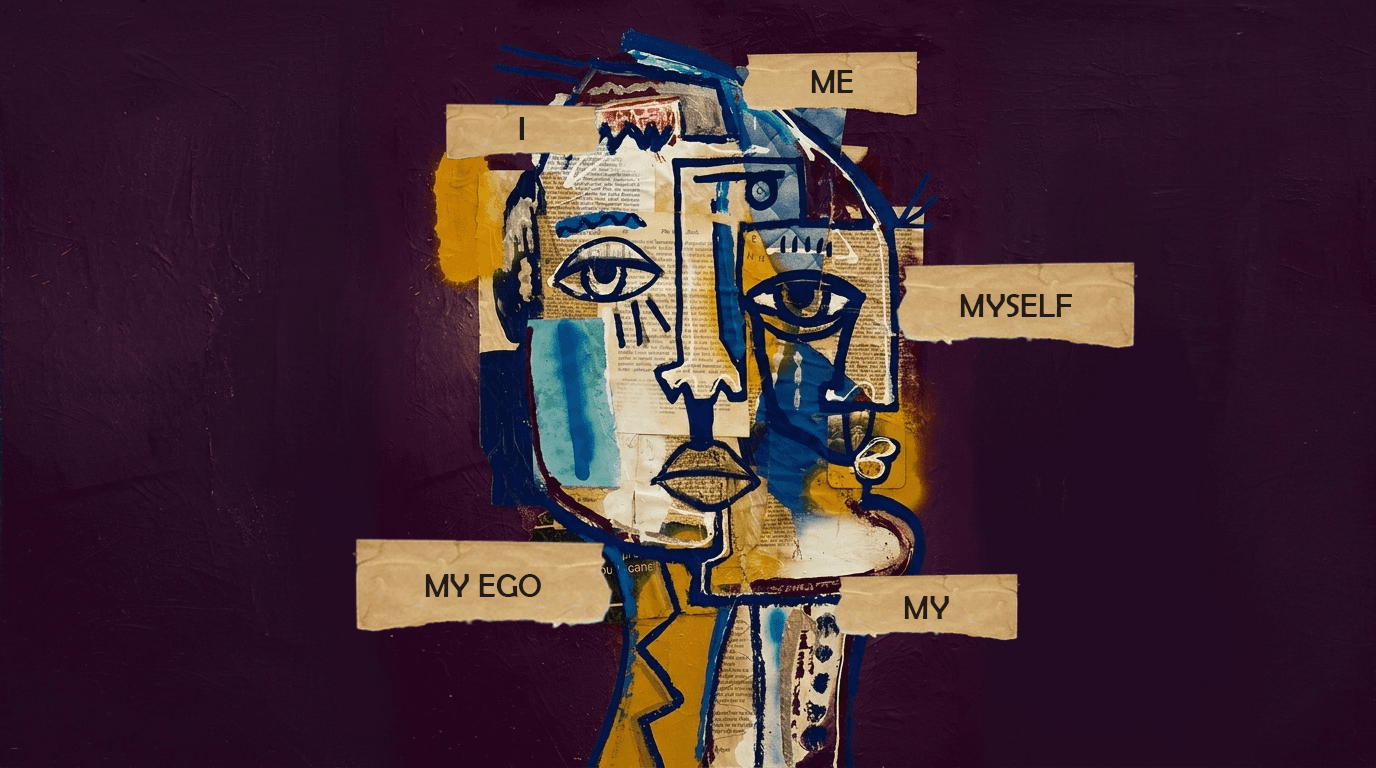
Modernism, a vast and restless cultural movement spanning the late nineteenth to the mid-twentieth century, was, at its core, an interrogation of the self. Shaped by the forces of industrialisation, urbanisation, and the expansion of capitalism, modernisation constructed the self as a unitary, authoritative, individualised, and personalised subject. Through rapid cultural and technological change, thinkers and artists alike found themselves asking a newly urgent question: in a world remade by discovery, science, and market forces, the individual was viewed ambivalently, as creator, and as instrument of utility.
The answers offered by modern philosophers, writers, and psychologists, Karl Marx, Sigmund Freud, Virginia Woolf, Franz Kafka, gave these fractures their most vivid form. Where Marx traced the structural wounds of alienation, and Freud mapped the unconscious currents beneath the composed surface of identity, Woolf dissolved the boundary between inner and outer experience, whilst Kafka’s protagonists found identity itself to be a bureaucratic absurdity, assigned from without and impossible to defend.
Education systems, cultural institutions, globalisation, and, above all, the market converged upon a single insistent message: the self — the “me”, the “I” — is the primary unit of existence. Every human interaction, every aspiration, every act of production or consumption was reframed as an expression of individual identity. The ego, once regarded as one faculty of the human being amongst many, was repositioned as the centre of gravity around which all meaning orbited.
Where early modernism commodified labour, late capitalism commodified identity itself. Aesthetics, lifestyle, and self-expression were absorbed into the market: art, design, fashion, and pop culture became not merely things to be enjoyed but instruments through which the ego could be constructed, displayed, and validated. Consumerism represents the terminal logic of this trajectory, the stage at which the nourishment of the ego ceases to be a cultural by-product and becomes the explicit purpose and meaning of life.
This is what Buddhism warned of, and this process has now reached a further, stranger stage, one I believe has no precedent. The ego is nourished by every aspect of life. The ordinary human being is at once fragile and formidable: their identity is a curated artefact, a persona assembled from purchases, performances, carefully edited images, and storytelling, presented and marketed to a society experienced as an audience and measured in units of attention. The ego has become the engine of existence. Standing out, gaining recognition, and accumulating status and symbolic capital have become ends in themselves, a performative culture in which only the loudest and most visible are heard, a logic that now structures education, employment, and personal relationships alike.
Francis Fukuyama’s assertion that liberal consumer democracy represents the “end of history” finds a troubling resonance here. Individual identity, in this dispensation, is defined not by character, vocation, or inner depth, but by the market, by consumption choices and social status. The result is a condition of deep conformity: a global homogenisation of taste and aspiration beneath the noise of apparent self-expression. The promise that freedom lies in choosing who you are through what you buy, display, and perform is a freedom structured by mimicry, everyone copying, everyone competing, everyone convinced they are the main character, whilst the choices themselves are pre-structured by the very market that presents them as free.
Today, everyone wishes to be monetised — a self packaged and sold — in an economy built upon the hunger of the ego, and which has every reason to ensure that hunger is never, finally, satisfied.