Consumerism
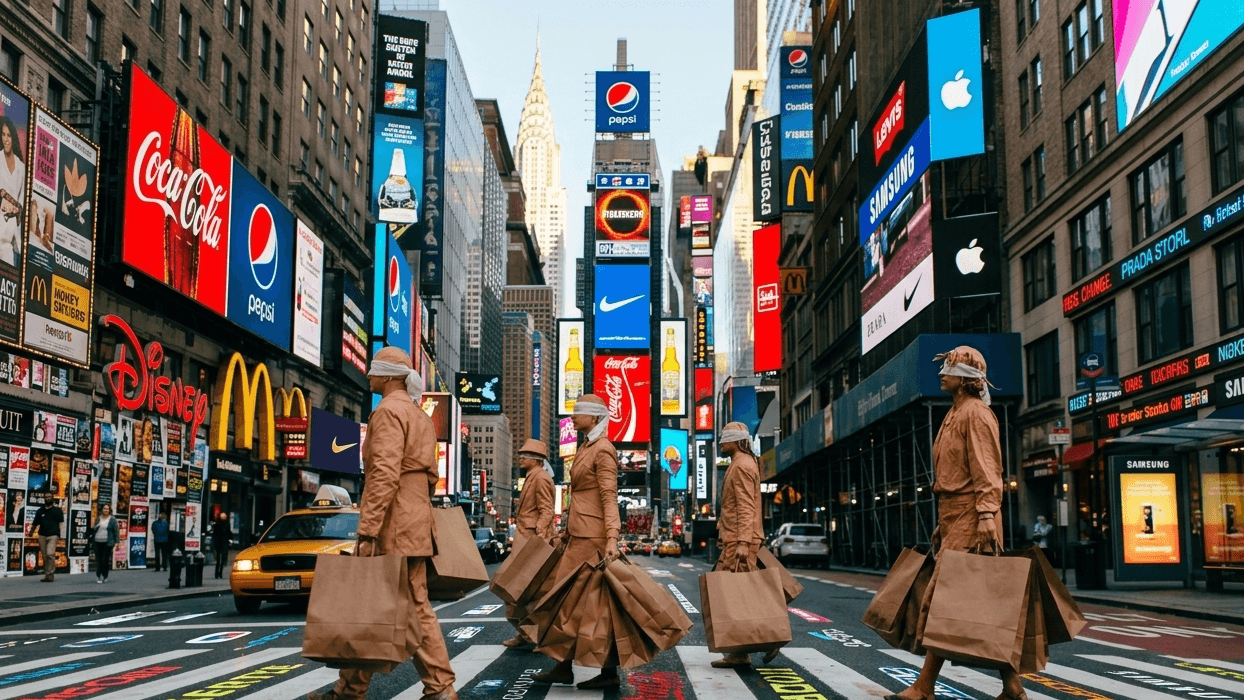
Throughout history, the pursuit of pleasure has often been the privilege of the wealthy.
From the lavish banquets of the Roman elite to the indulgences of the European bourgeoisie, life built around pleasure was a marker of status and exclusivity.
Epicurean philosophy, which emphasised the pursuit of refined and moderate pleasures to achieve tranquillity (ataraxia), was once a guiding principle for a select few.
However, with the rise of consumerism in the 1960s, pleasure-seeking was no longer reserved for the upper classes; it was democratised.
Mass production, aggressive advertising, and the expansion of credit transformed desire into an economic engine, making luxury and indulgence accessible to the many rather than the few.
But as pleasure became a commodity, did it bring true happiness? Or did the contemporary world blur the lines between fulfilment and excess, turning consumption into a habit and an addiction?
Let us recall that in the 1960s, we were in an era of high production. Most people in the Western world were actively participating in the creation, innovation, and production of goods and technologies.
Consumption was closely tied to labour and expertise; people largely consumed what they helped create. In other words, the products being developed reflected the skills, knowledge, and efforts of the working population.
This alignment between production and consumption fostered a sense of purpose, as innovation was driven by necessity and progress rather than sheer desire.
As time progressed into the 2000s, globalisation fundamentally reshaped the economic system, and the Japanese crisis in the 90’s was the starting point. To maximise profits, most Western companies outsourced production to developing countries, where labour was significantly cheaper. Industries that once thrived in the West, such as textiles, electronics, and even food manufacturing, were relocated overseas. Meanwhile, only highly specialised sectors, like pharmaceuticals, aerospace, and advanced scientific research, remained rooted in Western economies.
This shift led to a dramatic transformation: Western societies became predominantly service-oriented, focusing on finance, technology management, and political administration rather than tangible production. As a result, a growing disconnect emerged between creation and consumption; people no longer produced what they consumed, but instead relied on imported goods manufactured under conditions they neither witnessed nor controlled.
This growing disconnection between goods and the mental and physical participation in their creation has had profound consequences.
In the contemporary consumer culture, creation is no longer the driving force of progress; instead, consumption itself has become the primary goal, fuelling economic growth and propelling large corporations to unprecedented levels of power. People are encouraged to consume more and more, with short-term satisfaction replacing meaningful engagement.
This cycle of consumption feeds into a constant need for new desires to be fulfilled, leading to overconsumption. The rise of the internet and social media has further intensified this pattern, accelerating the demand for instant gratification.
At the heart of this issue is the widespread misunderstanding between pleasure and happiness. Consumerism thrives on the promise of pleasure, quick, fleeting rewards that stimulate desire but never provide lasting fulfilment. Buying a new gadget, indulging in fast food, or engaging in social media validation triggers the brain’s dopamine-driven reward system, creating a short-lived sense of enjoyment. However, true happiness is not found in these momentary highs; it is a deeper, more sustainable state of well-being that comes from meaningful connections, purpose, and self-growth. The distinction between these two concepts is critical to understanding why consumerism, despite providing pleasure, often fails to deliver happiness.
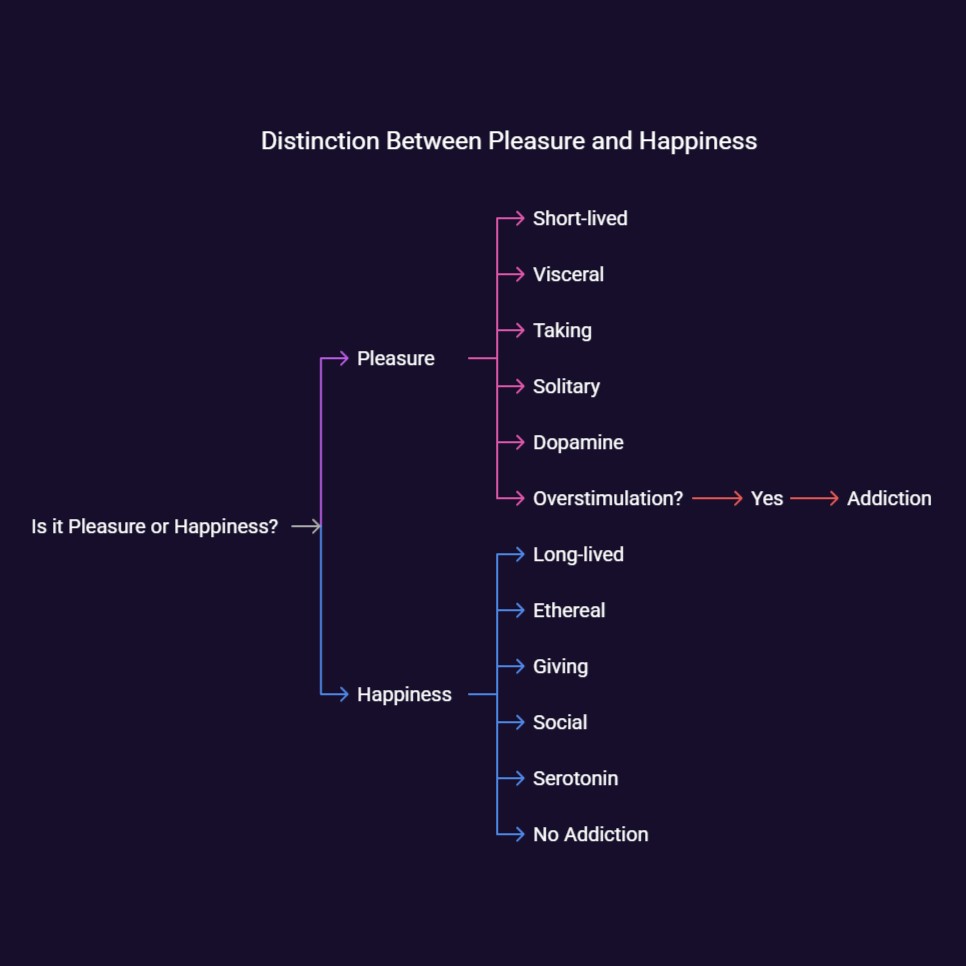
This contrast highlights how consumerism, built on the pursuit of pleasure, often leads to dissatisfaction rather than true happiness. In a society where buying more is equated with living better, the real problem remains that consumption, offering only fleeting pleasure, has been closely linked to depression, emptiness (nihilism), and a constant sense of lack. The only solution that has been normalised is to work more to buy more, perpetuating the cycle. Even spiritual and mental development has been commodified, with people purchasing courses and online training sessions in search of a sense of fulfilment, further reinforcing the idea that happiness can be bought rather than cultivated.
Consumerism has become an addiction—one that is never truly satisfied. Even those with limited financial means continue to consume as if they are not in need, driven by an insatiable urge for more.
Today, buying has become a reflex rather than a necessity, with fast-fashion giants like Shein and Temu capitalising on this compulsive behaviour. Much like addiction to alcohol, drugs, or cigarettes, consumerism creates a cycle where people, regardless of their financial situation, always find a way to fund their next purchase in pursuit of fleeting pleasure.
This endless cycle is not about necessity but about chasing dopamine-fueled gratification. The act of buying provides a temporary high, but once it fades, the craving returns, leading to more consumption, more waste, and ultimately, more dissatisfaction. As long as consumer culture equates material goods with happiness, the cycle will persist. The question we must ask ourselves is, 'How do we break free from this addiction and rediscover a more meaningful way to live?'