Marketing Post-2026: The Death and Rebirth of Desire
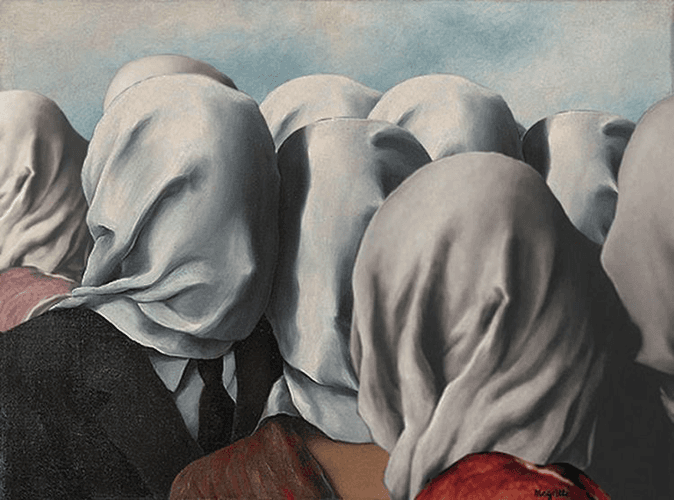
Marketing is inseparable from the social, cultural, economic, and political currents of its time. It is not merely a business tool; it is a mirror of collective consciousness, reflecting what a society values, fears, worships, and chases. Marketing reveals, with brutal honesty, where human attention has been captured and by whom. A high-trust society like Japan develops marketing built on subtlety, loyalty, and long-term relationships; a status-conscious society like France gravitates toward exclusivity, heritage, and the carefully cultivated aura of prestige; a price-sensitive society like India orients itself around value, practicality, and the intelligence of the shrewd buyer. Each marketing culture is, in essence, a portrait of its people's deepest desires and social conditioning.
In the last two decades, a particular obsession took hold of the marketing world: the obsession with reputation. Brands, institutions, public figures, and corporations became consumed by the pursuit of the cleanest, most polished image and narrative possible. Every word was calculated, every visual carefully curated, every public statement stress-tested against the prevailing social and political climate. This was the era of the perfect facade, driven partly by the rise of social media, partly by an increasingly vocal culture of public accountability, and partly by the genuine fear that a single misstep, a single negative review, or a single misinterpreted sentence could unravel years of carefully constructed brand identity. Reputation became not just an asset; it became a prison. And into that prison, willingly, walked almost the entire marketing industry.
In the language of marketing, reputation is not simply what people think of you; it is a carefully engineered psychological architecture, designed to make the widest possible audience feel simultaneously safe, attracted, and subtly aspirational. The formula, at its core, borrows from the Bauhaus principle of "less is more" but applied to identity and perception. Strip away anything controversial, anything too specific, anything too human, and what remains is a smooth, neutral, universally digestible brand surface onto which any consumer can project their own desires. Add a layer of compelling storytelling, a founding myth, a noble purpose, and a whisper of heritage, and you have the modern brand: a vessel engineered to sell prestige and status while appearing to sell something far more innocent.
This approach has dominated boardrooms and creative agencies for decades. Innovation itself became subject to reputation calculus; a genuinely disruptive idea was not evaluated purely on its merit but on the risk it posed to the carefully maintained image. Brands stopped asking what is true and new? and started asking, 'What is safe and palatable?' The result was a slow creative ambition across entire industries, as companies, each watching the others through the same mimetic gaze, began to resemble one another in voice, aesthetic, and aspiration. Competition intensified not because the field was expanding, but because everyone was crowding into the same narrow corridor of desire.
This is precisely what René Girard diagnosed as the root of human wanting. We do not desire independently or rationally; we desire through others. The object of desire, whether a luxury handbag, a lifestyle, or an ideology, carries no intrinsic magnetism until a model, a celebrity, an influencer, or even an admired peer turns their gaze toward it with longing.
Social media became the largest and most efficient temple ever built to mimic desire, with billions of subjects (followers), millions of models (influencers), infinite objects (products and ideas), and an algorithm engineered with mathematical precision to keep the triangle spinning without pause, without rest, and without question. Brands did not resist this dynamic. They fed it, accelerated it, and built their entire growth strategies upon it. And in doing so, they made themselves prisoners of the very machine they thought they were mastering.
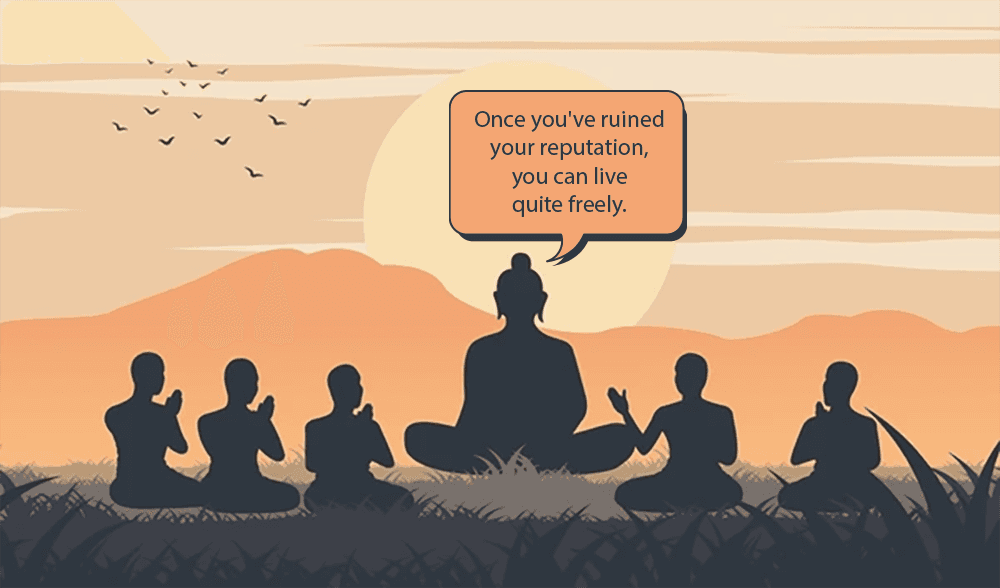
There is a quote attributed to Anthony Bourdain that cuts through the entire architecture of modern marketing like a blade: "Once you've ruined your reputation, you can live quite freely." It's the kind of gallows humour Bourdain perfected. But beneath it lives a profoundly liberating truth, one that is as ancient as Buddhism and as urgent as the present moment.
The fatalism surrounding reputation, amplified by mimetic competition and the relentless pressure of social performance, has done something quietly catastrophic to human culture; it has dramatically slowed the pace of genuine innovation. Strip away artificial intelligence, which stands as the singular disruptive exception of 2026, and what remains of contemporary culture reveals itself as largely regressive, a loop of recycled aesthetics, borrowed identities, and manufactured desires circling the same narrow corridor with increasing desperation. When every communication sounds the same, looks the same, and fears the same things, culture does not evolve; it calcifies.
The coming age of artificial intelligence will not simply change the tools of marketing. It will force a far more fundamental rupture, a break from the tyranny of reputation as the organising principle of brand identity. AI will commoditise the polished, the perfect, and the algorithmically safe at a scale and speed that makes the carefully curated facade not just unnecessary but invisible, indistinguishable from the noise. When everything can be made smooth, smooth becomes meaningless. When every brand can project perfection, perfection loses all currency.
What cannot be commoditised is meaning. What the algorithm cannot manufacture is a genuine purpose. And this is precisely where humanity is quietly, desperately, and almost unconsciously turning its attention. After decades of consuming experiences that are increasingly shallow, identities that are borrowed, and desires that were never truly their own, people are no longer simply seeking better products or more compelling content. They are seeking something to believe in, something that feels real. The new frontier of human attention is not experience, not even belonging; it is meaning.
Bourdain's quote is, at its deepest reading, a Buddhist declaration. To ruin your reputation in the mimetic sense is to stop performing safely for a dying audience of sleepwalkers chasing illusions, taking you to oblivion. Reputation is fear dressed in strategy, the fear of truth, the fear of impermanence, the fear of being genuinely seen rather than carefully presented. Every brand, every institution, every human being that clings obsessively to its constructed image is, beneath the surface, trembling.
The monk or the artist who has nothing to protect speaks the most powerful truth and has nothing to lose. Authenticity is not a marketing strategy. It is what remains when every strategy has been abandoned.
The market of the future is not a bazaar. It is a temple. And the brands that will fill it are not the ones with the cleanest reputations but the ones with the most honest souls.